Thirty miles or so northwest of the red-cockaded woodpeckers' pine barrens in Carteret County, Croatan National Forest takes on a decidedly different air. The dark, tannin-stained waters of Island Creek wind through cypress trees bedecked with spanish moss and huge loblolly pines backed up against massive yellow poplars and hickories. Underlying the forest is a shallow layer of coquina limestone, imprinted with the shells of mollusks long dead, ghosts of a thriving seabed some millions of years gone...now exposed in the creek bend by the erosive action of Island Creek over these past thousands of years.

On a mid-winter day, the trees and the water would rule this domain, but today, in early spring, the eye and the soul of the wanderer is captivated by the diminutive flora of the forest floor. Bold white bloodroot blossoms dominate, springing right out of the fossil-filled limestone in places.

Following close the meandering stream, the timelessness of the pine barrens permeates this scene as well, blurring the lines between past and present, overwhelming the senses with the tenacity of nature, of the wilderness...Here and Now, the forest is alive, as it has been for ages. And, before that, the ocean lived here, teeming with lifeforms familiar yet unknown.

The insect and the flower; pollen, nourishing the bee, replicating the flower, the forest lives.

The hunter, stealthily stalking the bee from the shadows of brown, the forest alive.

Another hunter, inching up out of the brown of the forest floor, green as the living leaves above.

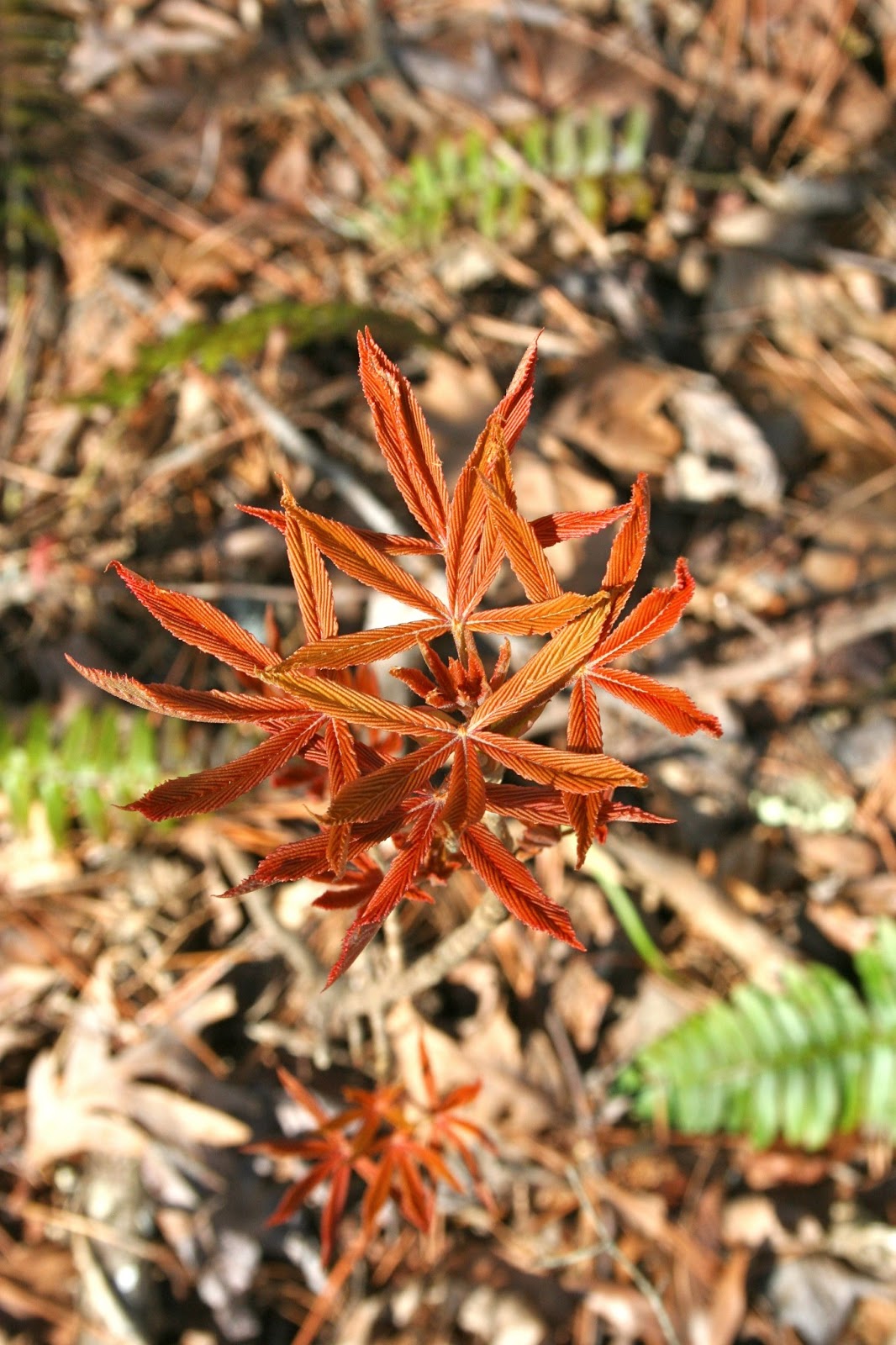
The diversity of life is awesome; a writhing mass of leaves; not ferns - lousewort.

Lousewort, too, is a flowering plant, only different...

The forest is alive with color, violet, in this instance.

Swiftly seeking shelter in the shade of the mayapple leaf, this woodland snail oozes along its trail of slime mere inches above the remains of millions of its ocean-dwelling molluscan ancestors.

Nearby, new life emerges, drawing vital nutrients from the decomposed remains of forests (and oceans) past, while the pine tree seeds, with their vast potential, lie dormant for the moment, biding their time until they, too, take their place in the long line of forest giants.

More bloodroot, two individuals in a colony occupying the entire forest floor.

Virginia pennywort, yet another flowering plant, gloriously inconspicuous.

Round-lobed hepatica, liverwort, stakes its claim to the life of the forest as well, joining with the bloodroot to give our coastal plain wood a decidedly piedmont flavor.

More bloodroot, but twelve petals, not eight; different is beautiful.

The pennywort sidles right up alongside the ubiquitous bloodroot and its oddly-lobed leaf, the forest floor comes alive in springtime, and springtime comes alive in the forest floor.

More hepatica amidst the ancient ferns and their fresh young fiddleheads...

The eyes resist, not easily lured from the visual feast below, but the persistent warbling from the branches conspires with the other senses to draw them upward for a glance at the forest's avian inhabitants.

But only for a moment, now back to the blossoms at the base of the tree, the forest alive.